New Puppy Training: A Four-Week Starter Guide
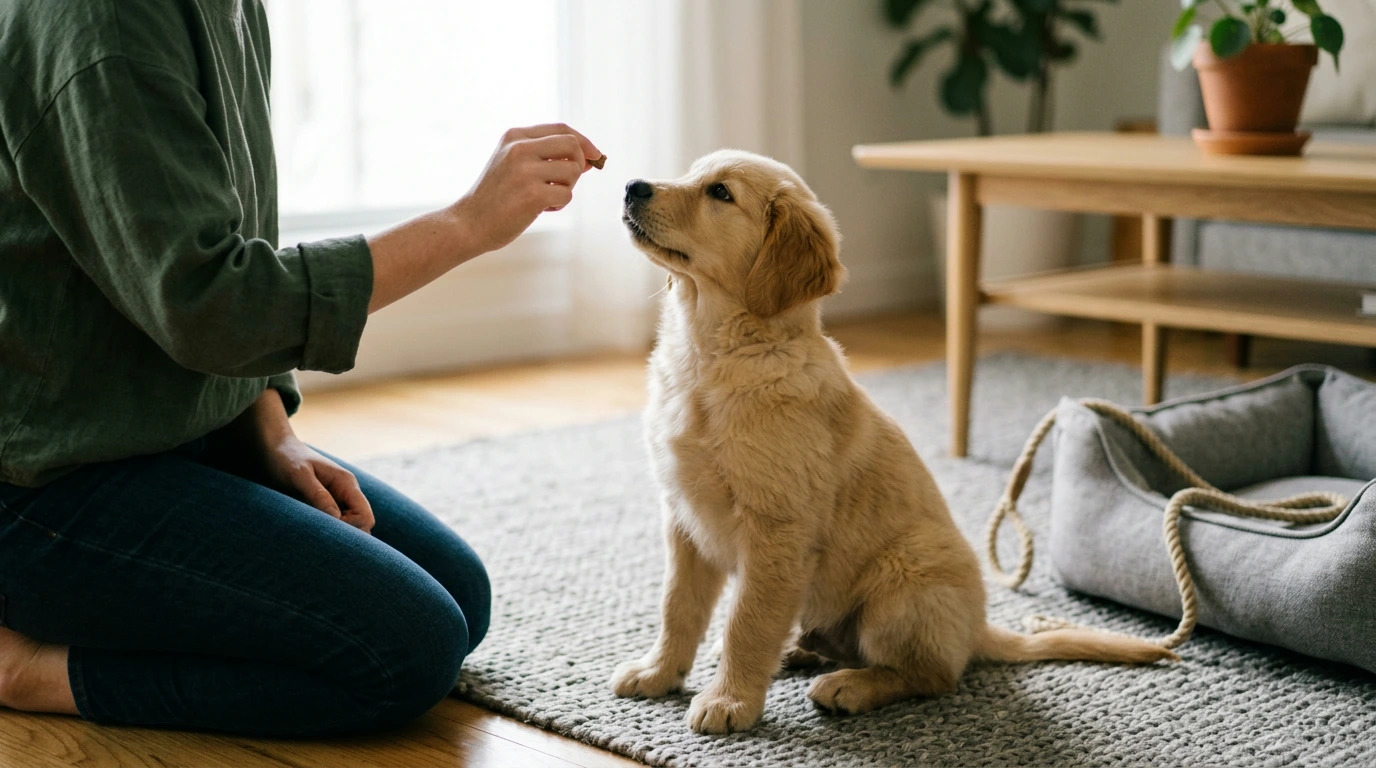
Bringing a puppy home is exciting, but the first few weeks can also feel unpredictable. A simple routine gives you a place to start while your puppy learns where to go, how to respond to you, and what to expect from daily life.
Our printable New Puppy Training Starter Guide brings those basics together in a flexible four-week framework. You can use it to organize your efforts without expecting every puppy to reach the same milestones on the same schedule.
Start With a Predictable Daily Rhythm
Consistent meal times, potty opportunities, play, and rest can help your puppy settle in. You do not need to plan every minute; focus on repeating the same helpful sequence throughout the day. That rhythm also makes it easier for everyone in your household to notice when your puppy may need a break outside.
Take your puppy out after waking, eating, and playing. When your puppy goes in the right place, offer praise or a small reward promptly so the connection is clear. Young puppies may need additional opportunities between these events, too.
| When | Routine idea |
|---|---|
| After waking | Potty break, then breakfast |
| After meals and play | Offer another potty opportunity |
| During the day | Alternate short training and play sessions with rest |
| Before bedtime | Offer a final potty break and settle into a quiet sleeping area |
Use the schedule as a starting point, not a rigid timetable. Your puppy’s age, energy level, and needs will shape how often you head outside and how much activity fits comfortably into a day.
Build House-Training Habits
Choose a consistent potty spot and take your puppy there regularly. Give your puppy a little time to sniff, and reward success immediately. Inside, keep your puppy within sight when possible so you can respond to signs such as circling or sniffing the floor.
Accidents are part of learning. Clean them with an appropriate pet-safe cleaner and avoid punishment, which can make your puppy fearful without teaching the desired behavior. If you catch your puppy starting to go indoors, calmly guide them outside and reward them if they finish there.
Progress varies by puppy and household. If accidents remain frequent or you notice other persistent concerns, consult your veterinarian. For more practical guidance, see Humane World for Animals’ house-training advice.
Practice Simple Commands
Start with skills that help you communicate in everyday situations. Say your puppy’s name in a cheerful voice and reward them for looking at you. For “sit,” reward the sitting position as your puppy offers it or follows a treat into position. For “come,” begin a short distance away, call your puppy once, and reward them when they reach you.
Keep sessions brief and positive, and finish before your puppy loses interest. A few repetitions during ordinary moments can be more manageable than a long lesson. Use small rewards your puppy enjoys, and avoid repeating a cue over and over if they are distracted.
Begin in a quiet room. As your puppy becomes more comfortable, practice in another familiar space and gradually introduce mild distractions. If a cue becomes difficult, make the task easier and reward the next success.
Make Socialization Positive
Socialization means helping your puppy experience the world comfortably, not rushing them through a checklist. Introduce people, everyday sounds, surfaces, and new surroundings gradually. Pair those experiences with treats or praise, and give your puppy space to observe or move away.
Avoid forcing greetings or overwhelming your puppy with too much at once. A short, pleasant encounter can be more useful than a long one that leaves your puppy worried. Watch their response and slow down when they seem uncomfortable.
Ask your veterinarian how to balance early socialization with vaccination and exposure precautions in your area. The American Veterinary Society of Animal Behavior’s puppy socialization statement is another helpful resource for discussing a safe plan.
Use the Four-Week Guide to Stay Consistent
When routines, house-training, commands, and socialization all need attention, a written framework can make the first month feel more manageable. Our New Puppy Training Starter Guide is a printable eBook for beginners, listed at $65.99. It brings these topics into one four-week plan you can revisit as your puppy progresses.
Before you begin, agree on the words your household will use for each cue and decide who will handle regular potty breaks. Adjust the pace when your puppy needs more practice; the guide is a starting framework, not a promise of a fixed training outcome.
If you are also considering a crate, our Choosing the Perfect Dog Crate printable checklist is a related resource for weighing comfort and suitability. Introduce any crate gradually and positively rather than using it as punishment.
FAQ
When should puppy training begin?
Begin gentle, reward-based routines when your puppy comes home. Keep sessions short and appropriate for your puppy’s age.
How long does house-training take?
Progress varies by puppy and household. Consistency helps, but a four-week guide does not guarantee complete house-training.
How can I socialize my puppy safely?
Introduce new experiences gradually and pair them with rewards without forcing interactions. Ask your veterinarian about vaccination and exposure precautions.









Leave a comment