Lizard Lovers’ Pet Checklist: Care Essentials Guide
Bringing a lizard home starts with more than choosing a name. You’ll need a habitat, a feeding plan, reliable equipment, and a way to keep track of everyday care. Our Lizard Lovers’ Pet Checklist digital guide is a $4.99 download designed to help beginners and enthusiasts organize those essentials.
A checklist is a useful planning tool, but it can’t tell you everything your particular lizard needs. Pair it with reliable, species-specific husbandry advice and guidance from a reptile veterinarian.
Start With the Right Lizard for Your Home
Before choosing a lizard, look beyond its appearance and consider what life with that species will involve. Adult size affects the space you’ll need, while lifespan can turn your decision into a commitment lasting many years. Activity patterns matter, too: a lizard that is most active when you’re away or asleep may not fit the experience you had in mind.
Compare handling tolerance as well, but remember that individual animals can differ. Some lizards are better appreciated through observation than frequent handling. Research the species’ diet, the availability and cost of its food, and the enclosure conditions it needs throughout its life.
No single lizard is the best fit for everyone. Before bringing one home, talk with a reptile veterinarian or an experienced specialist about the species you’re considering. Ask about adult habitat requirements, routine care, and common challenges so you can make a decision that suits both your household and the animal.
Prepare the Habitat Before Your Lizard Arrives
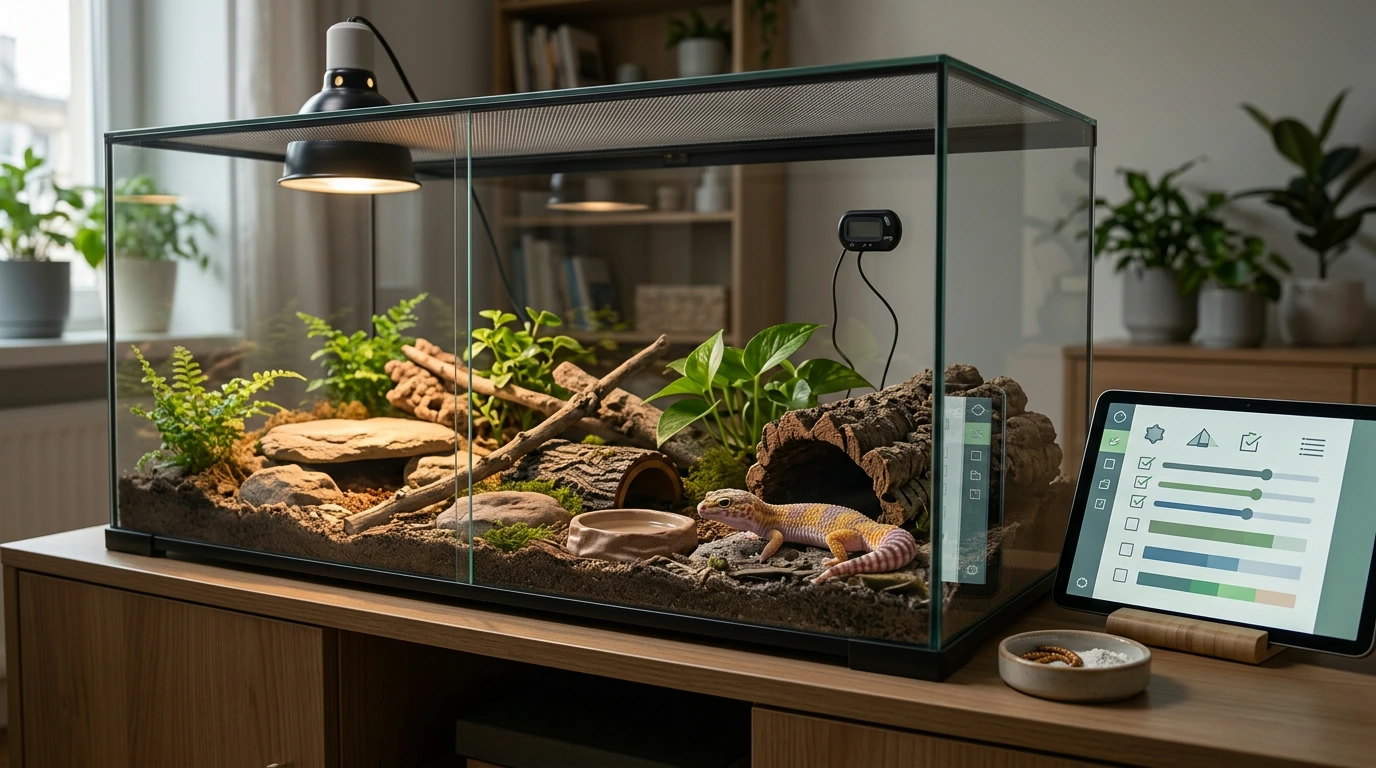
Set up and test the enclosure in advance rather than making adjustments after your lizard arrives. Choose a secure habitat with enough usable space for the species’ adult size and natural behavior. An animal that climbs may need a different layout from one that spends most of its time on the ground.
Select substrate, hides, branches, and other furnishings with the species in mind. Provide shelter that lets your lizard feel secure, while keeping the enclosure practical to inspect and clean. Avoid choosing materials solely because they look attractive; suitability depends on the animal and its care requirements.
Most lizards need access to a temperature gradient so they can move between warmer and cooler areas. Arrange heating and lighting for the species, including UVB where required, and use reliable thermometers and humidity-monitoring equipment to check conditions. A thermostat can help control compatible heating equipment, but you should still monitor the habitat regularly.
The table below is a planning overview, not a universal prescription. The right temperatures, humidity, lighting, and layout depend on the species you choose.
Habitat Planning Checklist
| Care area | What to plan | Why it matters |
|---|---|---|
| Enclosure | Choose a secure, appropriately sized habitat | Allows space for species-appropriate behavior |
| Heat and light | Arrange heating, lighting, and monitoring equipment | Supports appropriate temperatures and light exposure |
| Humidity | Select a suitable substrate and humidity-monitoring method | Helps maintain conditions suited to the species |
| Shelter | Provide suitable hides and furnishings | Offers places to feel secure and behave naturally |
For additional background, the Merck Veterinary Manual’s reptile management guidance explains how environmental conditions connect with reptile health.
Plan Food, Water, and Everyday Checks
Lizard diets vary considerably. Some species eat insects or other animal foods, some need plant foods, and others require a combination. Learn what your chosen species eats, how often it should be fed, and how its needs may change with age. Ask a qualified reptile veterinarian about appropriate supplements and how to use them.
Provide clean water in a form suitable for your lizard, and refresh it regularly. Make sure food and water arrangements are accessible and appropriate for the enclosure. Keeping necessary supplies on hand helps you avoid last-minute substitutions that may not meet your pet’s needs.
Build a short observation routine into your day. Check temperatures, humidity, and equipment; notice your lizard’s appetite, activity, and appearance; and remove waste or uneaten food as appropriate. Keep a cleaning routine for the enclosure and its furnishings, using products and methods suitable for reptiles.
Know how to reach a reptile veterinarian before you need one. If you notice a concerning change in eating, movement, appearance, or behavior, contact your veterinarian for advice rather than waiting for a checklist to provide an answer. The RSPCA’s reptile care resources offer another starting point for understanding these animals’ needs.
Keep Your Care Plans Organized
Good preparation brings several decisions together: the right species, a working habitat, a suitable diet, and a dependable care routine. Our team offers the Lizard Lovers’ Pet Checklist as a digital guide to help you keep those essentials in mind, whether you’re preparing for your first lizard or organizing care for a reptile you already own.
Use the guide alongside advice tailored to your species and your veterinarian’s recommendations. You can explore the product page and purchase the digital download for $4.99.
If you’re still considering which kind of pet might fit your life, our Purrfect Match digital guide offers another way to approach that decision. Any tool you use to narrow your options should be followed by species-specific research and professional advice.
FAQ
What should I prepare before bringing a pet lizard home?
Prepare a secure, species-appropriate enclosure with heating, lighting, monitoring equipment, shelter, food, and water. Identify a reptile veterinarian in advance.
Are all pet lizards cared for the same way?
No. Diet, temperature, humidity, enclosure, and lighting needs vary by species, so follow guidance tailored to the lizard you choose.
Who is the Lizard Lovers’ Pet Checklist for?
The digital guide is for reptile owners, including beginners and enthusiasts who want help organizing care essentials.










Leave a comment