Dog Mental Enrichment Checklist: Ideas for Everyday Play
A little variety can turn an ordinary part of your dog’s day into an opportunity to explore. A few minutes of sniffing, a familiar training cue, or an easy food puzzle can give you both something enjoyable to do together.
Our printable mental enrichment checklist makes it easier to gather ideas and plan a routine that suits your dog. You don’t need to fill every spare moment with activities. Start with something manageable, notice your dog’s response, and leave plenty of room for rest.
Why Mental Enrichment Matters
Dogs experience the world through their senses, and everyday opportunities to sniff and explore can add variety to familiar surroundings. Simple problem-solving games and chances to make choices, such as deciding where to sniff on a walk, can also make a routine more engaging.
Mental enrichment complements physical exercise, rest, and companionship; it doesn’t replace them. A dog who enjoys a short training game still needs appropriate movement, a comfortable place to relax, and time with the people they trust.
Choose activities with your dog’s age, health, interests, and comfort level in mind. A young, energetic dog may enjoy a more active search, while an older dog may prefer finding a few pieces of food close by. The ASPCA’s dog enrichment guide offers more ideas for adding variety to daily life.
A Printable Checklist for Everyday Inspiration
Our The Ultimate Mental Enrichment Checklist for Dogs is a digital download and printable guide for dog owners looking for enrichment ideas. It’s a practical resource to keep nearby when you want to add something different to your dog’s week.
Try placing the printed guide with your pet supplies or somewhere you usually plan your schedule. You can choose a mix of activities across the week rather than relying on the same game every day. The checklist is listed at $3.99; visit the product page for current purchasing details.
Planning can be simple. Choose an activity that fits the time and space you have, then adjust it to your dog. A short, pleasant experience is more useful than a complicated one that leaves either of you frustrated.
Build a Mix of Enrichment Activities
The following examples are ideas you can adapt at home; they aren’t a list of the activities included in the printable checklist. Start with an easy version and increase the challenge only when your dog is comfortable and interested.
| Activity | How to start | What to watch for |
|---|---|---|
| Sniff-and-find | Scatter a small portion of food in a safe area. | Choose a clean space and supervise eating. |
| Short training game | Practice a familiar cue with a reward. | Keep sessions brief and stop before frustration sets in. |
| Supervised puzzle toy | Choose an easy, appropriately sized puzzle. | Check for damage and remove loose pieces. |
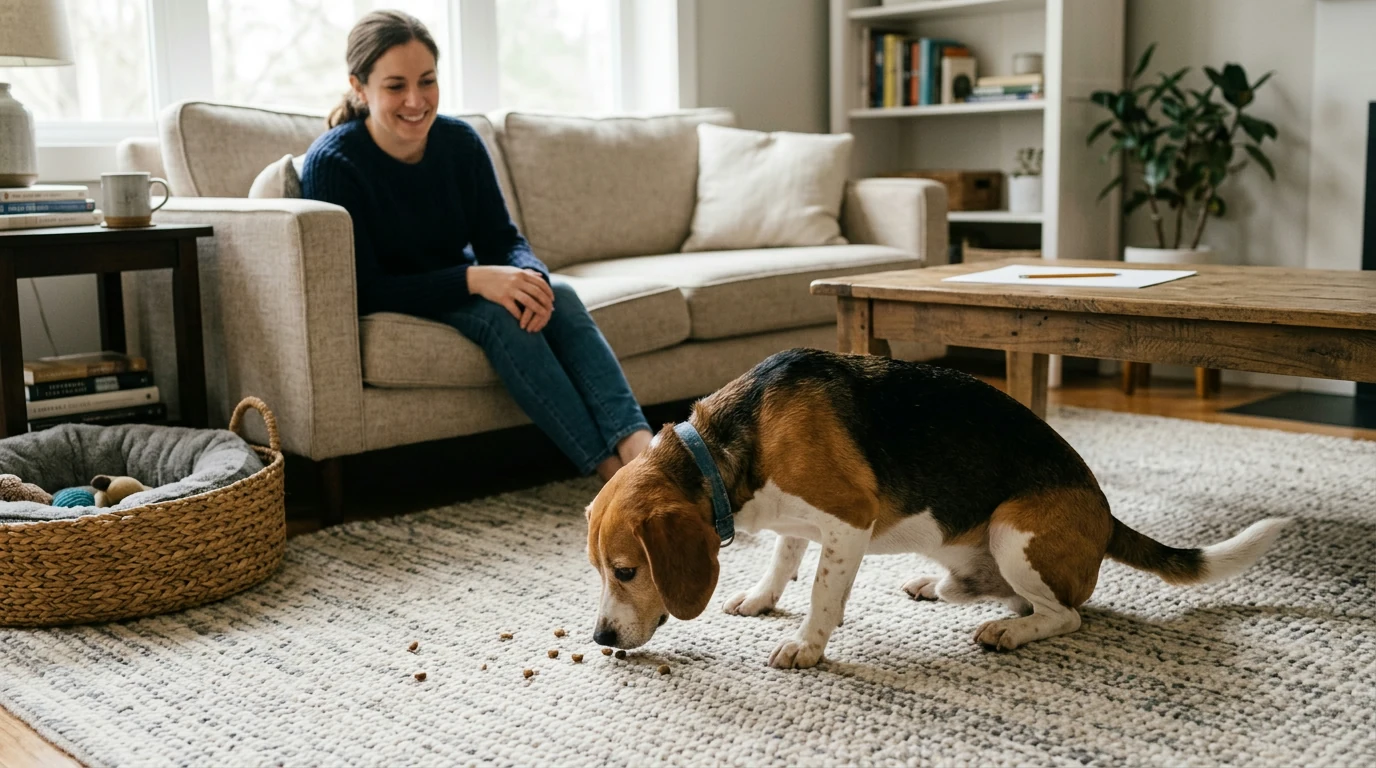
For a sniff-and-find game, begin with food in plain sight so your dog can succeed quickly. If they enjoy it, spread the pieces a little farther apart. Indoors, make sure the area is free of small objects or anything else your dog shouldn’t eat.
A training game can be as simple as asking for a cue your dog already knows and rewarding the response. Keep your tone encouraging and finish while your dog is still engaged. The American Kennel Club’s training resources provide additional guidance on building skills with your dog.
Supervise enrichment activities and use dog-safe materials. When using treats or kibble, account for them as part of your dog’s daily food intake. You can use a portion of a regular meal for some food-based games.
Create a Routine That Fits Your Dog
Pick one manageable activity to try first. Watch whether your dog approaches willingly, stays interested, and seems comfortable. If the activity goes well, you can repeat it another day or rotate in a different option to keep the routine varied.
Pause or simplify if your dog avoids the activity, makes repeated unsuccessful attempts, or loses interest. For example, make a food search easier by placing pieces closer together, or switch from a puzzle to a familiar cue. Your dog doesn’t have to enjoy every idea.
Allow downtime between activities, too. If health or behavior concerns affect what your dog can comfortably do, ask your veterinarian for guidance before building a new routine.
Pair Planning With a Comfortable Home Setup
A calm resting place gives your dog space to settle after play. Keep enrichment sessions separate from downtime when possible, and let your dog step away when they’ve had enough.
If you’re considering a crate as part of your home setup, our Choosing the Perfect Dog Crate printable guide is a separate resource to help you explore that decision.
Ready to begin? Explore our enrichment checklist and choose one activity that matches your dog’s interests and comfort level. A small, enjoyable start can make planning the next opportunity feel easier.
FAQ
How often should I give my dog mental enrichment?
Fit short, enjoyable opportunities into your dog’s regular routine and adjust them to their energy, health, and interest. Make time for rest, and simplify or pause if your dog seems uncomfortable or disengaged.
Do I need special equipment for dog enrichment?
No. You can use a portion of your dog’s food, familiar cues, or a safe household space for simple activities. Specialized toys are optional, and supervision matters whichever activity you choose.
Is the checklist a physical product?
No. Our mental enrichment checklist is a digital download described as a printable guide.









Leave a comment