Cat Body Language Cheat Sheet: Signals, Postures & Meows
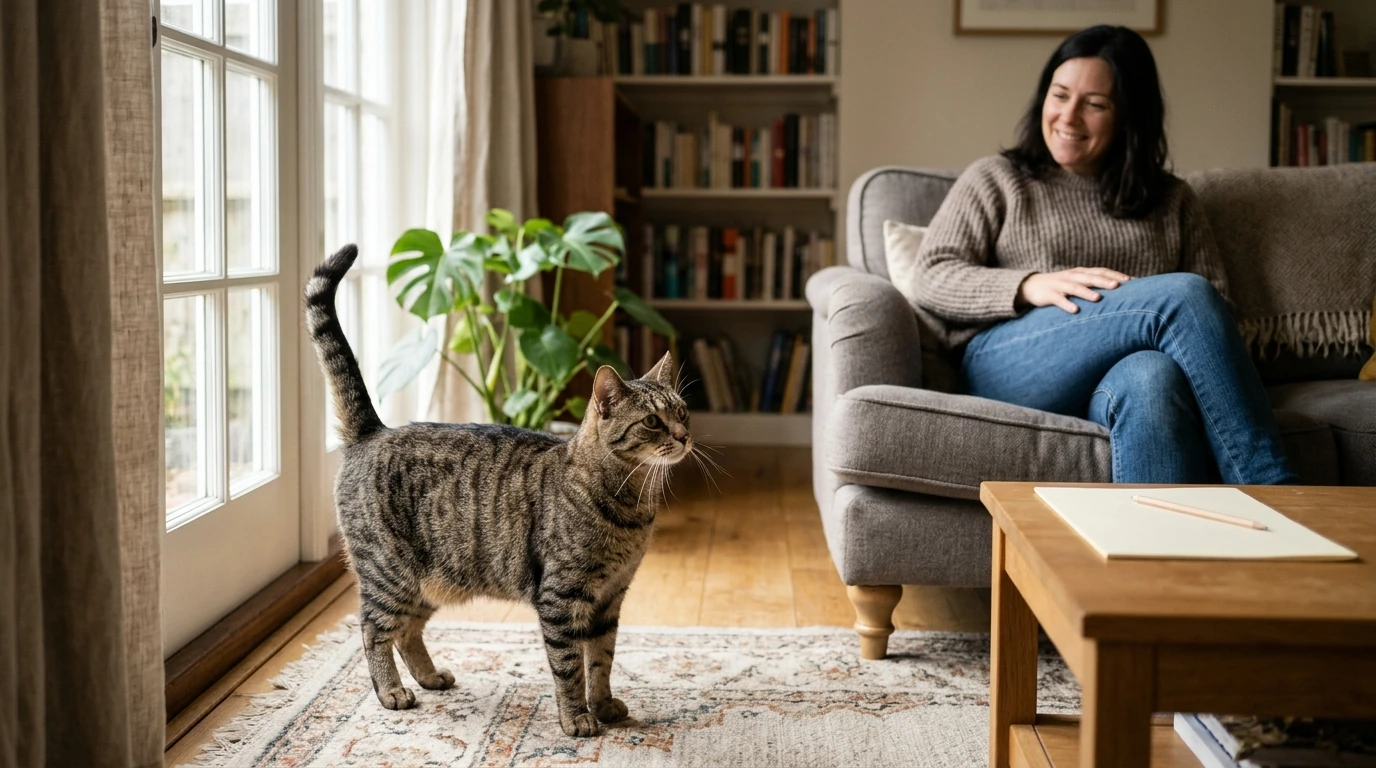
Cats communicate with their whole bodies, from the angle of their ears to the way they move their tails. Their sounds matter, too, but no single signal tells you everything. A printable cat communication guide can help you notice the details, learn your cat’s habits, and choose a response that feels comfortable for both of you.
Read the Whole Cat, Not Just One Signal
A tail position is a useful clue, but it becomes more meaningful when you also notice the cat’s ears, eyes, body posture, and surroundings. An upright tail often accompanies a friendly greeting, for example, while a flicking tail paired with a stiff body may mean it’s time to pause.
Context matters just as much. A cat watching a bird through a window may look intensely alert without wanting to interact with you. Another cat may flatten their ears because a sudden noise startled them. Watch from a comfortable distance, and compare what you see with your cat’s usual behavior rather than treating one cue as a definitive answer.
Common Cat Signals at a Glance
| Signal | Possible meaning | Helpful response |
|---|---|---|
| Upright tail with relaxed posture | Often a friendly greeting | Let the cat approach and offer a gentle greeting |
| Flattened ears and crouched body | May indicate fear or stress | Give the cat space and reduce stimulation |
| Tail flicking with a tense body | May signal irritation or arousal | Pause interaction and watch for other cues |
| Meowing | Can have several meanings depending on context | Check the situation and the cat’s usual patterns |
These are starting points, not translations that apply to every cat. The more often you observe your cat during ordinary routines, the easier it becomes to notice when something looks different.
Notice Changes in Posture and Sound
A relaxed cat may rest with loose muscles, neutral ears, and a soft gaze. An alert cat may hold their head up, direct their ears toward a sound, and focus closely on what is happening. Alertness can reflect curiosity as well as concern, so look for tension elsewhere before deciding how to respond.
A defensive cat may crouch, flatten their ears, or try to move away. Some cats hiss or growl when they feel threatened. If you see these signs, avoid reaching in to comfort or restrain the cat unless necessary for immediate safety. Instead, step back and give them a quiet path to leave.
Meows are just as individual. Your cat might meow near a food bowl, at a closed door, or when seeking your attention. Pay attention to what happens before and after the sound, as well as its timing and frequency. That pattern can help you respond without assuming every meow means the same thing.
Sudden or persistent behavior changes deserve attention, especially alongside signs of discomfort, changes in eating or litter box habits, or unusual hiding. Contact your veterinarian for advice rather than assuming the change is purely behavioral. The ASPCA’s cat behavior resources offer additional guidance on common concerns.
Keep the Printable Guide Close at Hand
Our Cat Body Language & Behavior Cheat Sheet is a quick-reference printable for cat owners and other household members. At $9.99, it gives you a convenient place to revisit common signals as you learn how your own cat communicates.
Keep it somewhere your household can consult it, and use it to start a conversation about what each person notices. You might record when your cat approaches for attention, which interactions they enjoy, and what tends to make them retreat. Use the guide for observation, not to diagnose a medical or behavior problem.
If you’re still considering which pet may fit your household, our Purrfect Match: How AI Can Help You Find the Right Pet offers a separate starting point for thinking through that decision. A guide can support your questions, but time, resources, and the individual animal’s needs still matter.
Respond in a Way That Builds Trust
Let your cat initiate contact when possible. You can sit nearby and allow them to approach instead of reaching toward them immediately. If they seem receptive, offer a brief, gentle interaction, then pause and see whether they stay engaged. A cat who turns away or becomes tense may prefer a break.
Make sure your cat has an escape route and access to a quiet place away from activity. Avoid cornering them, and ask children and visitors to give them room. A shared household approach helps: agree to stop petting when tension appears and let the cat decide when to return.
Every cat has preferences. One may enjoy company from across the room, while another seeks frequent lap time. Respecting those differences can make daily interactions more comfortable. For more on feline communication, visit International Cat Care’s guide to understanding your cat.
FAQ
What does a flicking cat tail mean?
A flicking tail can indicate arousal or irritation. Look at the rest of your cat’s posture and consider the situation before deciding how to respond.
Why does my cat meow so much?
Cats meow for different reasons, including asking for food, attention, or access to a space. Consider the context and your cat’s normal patterns, and consult your veterinarian if vocalization suddenly changes or persists.
Can a cat body language cheat sheet replace veterinary advice?
No. A cheat sheet is a reference for observing communication, not a diagnostic tool; seek veterinary advice when you notice concerning changes.












Leave a comment