Dog Enrichment Toys: A Busy Dog Checklist
A dog who loves sniffing through the grass may not care much about chasing a ball. A determined chewer may need a very different option from a dog who enjoys working for treats. Choosing toys around those preferences can make playtime more engaging for both of you. For more guidance, see Toys and Puzzles for Your Pet – Veterinary Medical Center.
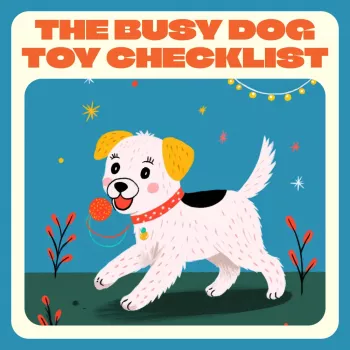
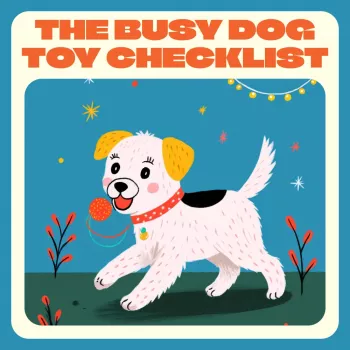
Our The Busy Dog Toy Checklist printable guide gives you a practical way to plan dog enrichment. Use it alongside your observations to consider which activities fit your dog and your daily routine. For further reading, see Canine DIY Enrichment.
Start With Your Dog’s Play Style
Before choosing another toy, notice what your dog already likes to do. Does your dog follow scents on walks, carry toys around, or eagerly chase a ball? Those habits offer useful clues. You can also try several simple activities and see which ones hold your dog’s attention.
- Sniffers may enjoy finding a few pieces of food hidden in an easy scent game.
- Food-motivated dogs may enjoy working out how to get food from a dispensing toy.
- Chewers may appreciate a dog-appropriate chew toy suited to their strength.
- Chasers may prefer a short game of fetch in a safe area.
Play style is only part of the decision. Consider your dog’s size, age, chewing strength, and physical limitations, too. A toy that works for a gentle adult dog may not suit a strong chewer. If your dog has mobility concerns or you are unsure which activities are appropriate, ask your veterinarian.
Introduce anything unfamiliar at an easy level. For example, make food easy to reach at first rather than expecting your dog to solve a difficult puzzle immediately. If your dog walks away, vocalizes, or seems frustrated, simplify the activity or try something else.
Match the Toy to the Activity
Think about what you want your dog to do, then choose an approach that supports it. The table below compares common enrichment options; it is a planning aid, not a description of the contents of our printable guide.
| Activity | Toy or approach | What to consider |
|---|---|---|
| Sniffing | Snuffle mat or supervised scent game | Start simply and check fabric for damage. |
| Food finding | Treat-dispensing toy | Use suitable portions and an accessible difficulty level. |
| Chewing | Dog-appropriate chew toy | Match size and durability to chewing style. |
| Chasing | Fetch toy | Choose a safe space and allow rest breaks. |
Choose toys large enough that your dog cannot swallow them, and supervise play, especially with a new toy or a strong chewer. No single toy suits every dog, so watch how yours uses it rather than relying on the activity label alone. Humane World for Animals’ dog toy guidance offers more advice on selecting and using toys safely.
Food-based play also calls for a little planning. You can use part of your dog’s regular food allowance instead of automatically adding extra treats. Ask your veterinarian about suitable foods and portions if your dog has dietary restrictions or health concerns.
Make a Busy-Dog Routine Easier to Plan
Enrichment does not have to mean offering a different complicated game every day. A short sniffing activity before you start work, a supervised chew session later, and a game of fetch when you have outdoor time may be more manageable than a lengthy routine.
We offer The Busy Dog Toy Checklist printable guide for $5.99 as a digital download. It is a printable dog enrichment guide, not a physical dog toy. You can use a checklist to organize your toy choices around the activities your dog enjoys and the time you have available.
As you plan, note which activities your dog returns to and which ones need adjusting. A food toy may work well on busy mornings, while a scent game may be a better choice when you can supervise closely. Your routine can change as your dog’s interests and needs change.
If you are also planning your dog’s home setup, our Choosing the Perfect Dog Crate printable checklist is another digital guide to consider.
Keep Play Safe and Interesting
Inspect toys regularly for loose parts, torn fabric, cracks, or pieces that could be swallowed. Remove damaged items rather than leaving them available for another session. For fabric-based scent activities, pay particular attention if your dog starts pulling at or chewing the material.
Rotate suitable toys to offer variety without making every session feel new or difficult. You might put one toy away after supervised play and bring out another on a different day. Keep a favorite available when it is appropriate and safe for your dog.
Watch your dog’s response and keep sessions short enough to stay enjoyable. Pause for rest during active games, and stop or change the activity if your dog seems tired, uncomfortable, or frustrated. The ASPCA’s guide to enriching your dog’s life offers additional ideas for adding variety to your dog’s day.
Our team recommends treating every plan as flexible: the best activity is one your dog can enjoy safely, at a difficulty level and pace that work for them.
FAQ
What kinds of toys can keep a dog busy?
Food-dispensing toys, sniffing activities, chew toys, and fetch toys can all provide engagement. The best fit depends on your dog’s preferences, size, chewing style, and physical needs.
Is The Busy Dog Toy Checklist a physical toy?
No. It is a printable dog enrichment guide offered as a digital download.
Should dogs be supervised with enrichment toys?
Yes, particularly when a toy is unfamiliar or your dog is a strong chewer. Inspect toys for damage and remove unsafe items.








Leave a comment