Pet Feeding Tracker Checklist for Cats and Dogs
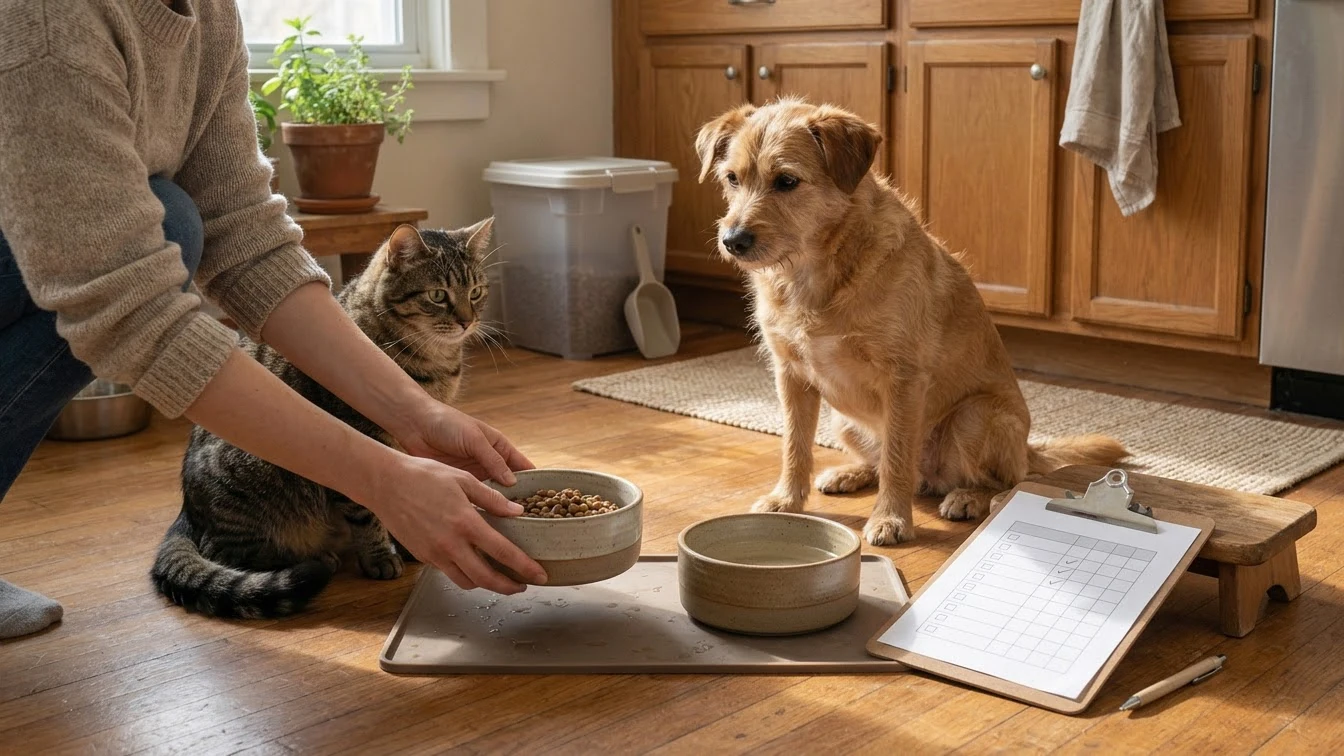
When several people help care for a pet, a simple question can become surprisingly hard to answer: Has breakfast already been served? Our Pet Feeding Tracker Checklist gives you a practical way to keep mealtimes organized, whether you care for a cat, a dog, or both.
A feeding log can make the daily routine clearer without adding much work. Once you choose a convenient place for it and agree on how to update it, everyone involved can see what has been done and what still needs attention.
Make Mealtimes Easier to Track
It is easy to lose track of a meal during a busy morning or a change in routine. One caregiver may assume someone else has filled the bowl, while another may not realize a meal was already served. A written record gives you a shared reference instead of relying on memory alone.
Our Pet Feeding Tracker Checklist is a printable digital download designed as an everyday routine organizer for cats and dogs. It is listed at $4.99 USD; pricing may change.
You can use a feeding checklist as part of a regular household routine or bring it out when a family member, friend, or sitter is helping. The key is to update the record when food is served, rather than waiting until later when details may be harder to remember.
Build a Feeding Checklist That Works for Your Pet
Start with the information that makes each meal easy to identify: your pet’s name, the planned mealtime, the food, and the amount. Once you serve the meal, mark it as fed. If someone else checks the record later, they can quickly see whether it is their turn to help.
You can also note a missed meal or a change in appetite. These observations are useful context if you need to talk with your veterinarian. Keep notes factual and specific, such as “left half of breakfast” rather than a general description like “ate less.”
The following table is an example of information you might track, not a representation of the printable’s exact layout:
| Pet | Time | Food and amount | Fed? | Notes |
|---|---|---|---|---|
| Cat | 8:00 a.m. | Food and portion prescribed for the pet | Yes | Ate normally |
| Dog | 6:00 p.m. | Food and portion prescribed for the pet | Yes | Ate normally |
Choose a level of detail that you can maintain. A short, consistently updated record is more useful than an elaborate one that everyone forgets to complete. If your pet has a feeding plan that changes, update the instructions you share with caregivers as well.
Keep Everyone on the Same Schedule
Place your printed checklist somewhere caregivers can easily see and update it, such as near the food storage area. Keep a pen nearby, and let everyone know that marking a meal is part of serving it. A quick check before feeding and a quick update afterward can help reduce duplicate or missed meals.
In a multi-pet home, use a separate entry for each animal, even when pets eat at the same time. Names help distinguish similar routines, while individual food and portion notes make it easier to follow different feeding plans.
When a sitter or family member takes over, give them a clear handoff. Show them the latest completed entry, explain when the next meal is due, and point out any instructions that matter for each pet. Ask them to continue updating the record so you can pick up the routine smoothly when you return.
Pair the Log with Your Vet’s Feeding Advice
Your veterinarian can help you choose an appropriate food, portion, and feeding frequency for your individual pet. Use the tracker to record that plan, not to decide what the plan should be. A checklist supports organization and does not replace veterinary advice.
If an appetite or routine change raises concerns, bring relevant notes to your appointment. Dates, missed meals, and observations about how much your pet ate can help you describe what happened. Contact your veterinarian promptly if you are concerned rather than waiting to collect a longer record.
For more information about nutrition conversations, explore the WSAVA Global Nutrition Guidelines and the AAHA Nutrition and Weight Management Guidelines.
Add the Tracker to Your Pet Care Routine
Our team designed our selection of printable resources to make everyday planning more approachable. Explore the feeding tracker if you want a simple shared record for meals, then choose a consistent time and place to update it. Small habits can make care easier to coordinate across a busy household.
If you have a dog, our separate printable dog crate checklist and guide is another resource to consider alongside your feeding log. It focuses on a different part of care planning, so you can use each resource for its own purpose.
FAQ
Can I use a feeding tracker for both cats and dogs?
Yes. Keep separate records for each pet and follow the feeding guidance appropriate to each animal.
What should I record in a pet feeding log?
Record the meal time, food, portion, and whether the meal was served. Add relevant appetite notes when useful.
Does a feeding tracker tell me how much to feed my pet?
No. Use the tracker to record your pet’s feeding plan, and ask your veterinarian for individualized advice.








Leave a comment