Helping Pets Handle Vacuum Stress: A Calmer Routine
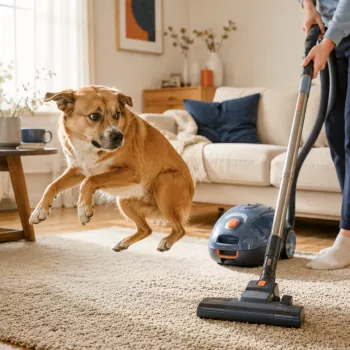
The sound and movement of a vacuum can be unsettling for pets, even when cleaning is a familiar part of your routine. If your dog or cat disappears as soon as you reach for the vacuum, you’re not alone. A calmer cleaning day starts with giving your pet room to feel safe and letting them set the pace. For more guidance, see Help your anxious or fearful dog gain confidence.
Our team recommends combining a comfortable retreat with gradual introductions rather than expecting your pet to tolerate the vacuum all at once. For another option to explore alongside that approach, we offer Helping Pets Handle Vacuum Stress. For further reading, see Fearful dogs.
Notice When Your Pet Needs More Space
Pets show discomfort in different ways. Your pet might hide, tremble, pace or bark. They may freeze, turn away or refuse a favorite treat. Some animals move quietly out of the room, while others react as soon as the vacuum appears.
Notice what changes when the vacuum comes out, moves or makes noise. Those observations can help you choose a starting point that feels manageable for your pet. If they move away, let them. Don’t carry, pull or coax them closer to the vacuum when they are trying to avoid it.
A pet that looks relaxed at one distance may become uneasy a little closer. The goal is not to test how much they can tolerate; it’s to give them opportunities to feel comfortable while keeping an escape route available.
Set Up a Comfortable Retreat
Before cleaning, prepare a quiet room away from the area you plan to vacuum. Add fresh water, familiar bedding and a safe place where your pet can hide. A dog may appreciate their usual resting spot, while a cat should have access to a litter box as well as a hiding place.
Let your pet settle before you start. Keep exterior doors and other potential escape routes secure, particularly if your pet may bolt when startled. At the same time, make sure the retreat gives them room to move comfortably. Never confine a distressed pet close to the running vacuum.
For dog owners considering a dedicated resting area, our Choosing the Perfect Dog Crate printable checklist and guide is another resource to explore. A crate should not be used to force a frightened dog to stay near the vacuum.
Build Familiarity at Your Pet’s Pace
When you aren’t trying to clean, leave the switched-off vacuum at a distance where your pet remains relaxed. You can offer a favorite treat or invite a little play while the vacuum is present. Keep the interaction brief and allow your pet to leave whenever they want.
Once your pet is comfortable with the stationary vacuum, try moving it briefly while it is still switched off. Later, you can introduce a short burst of sound from farther away. Each change is a separate step, and your pet may need several sessions at one stage before moving to the next.
If you notice tension, stop and return to an easier step. Refusing a treat can be a useful signal, but it isn’t the only one: watch your pet’s whole body and behavior. The ASPCA’s guidance on fearful dogs offers additional context on recognizing and responding to fear.
A Gentle Introduction to the Vacuum
| Step | What to try | When to pause |
|---|---|---|
| 1 | Leave the switched-off vacuum at a comfortable distance. | The pet hides, freezes or moves away. |
| 2 | Move the switched-off vacuum briefly while offering a reward. | The pet stops engaging or shows tension. |
| 3 | Run the vacuum briefly at a greater distance. | The pet becomes distressed or refuses a favorite treat. |
Make Cleaning Days More Predictable
When possible, plan short cleaning sessions instead of vacuuming the whole home at once. Give your pet time to settle in their retreat before turning the machine on, and allow a quiet break afterward. If you need to clean another room, check where your pet is first so you don’t surprise them.
Avoid chasing your pet with the vacuum, even in play. If they leave their retreat or seem worried, pause and give them space to recover. You can adjust the next session by cleaning for less time or choosing a room farther away.
If fear is severe, persistent or getting worse, ask your veterinarian or a qualified behavior professional for help. They can help you assess your pet’s needs and plan a gradual approach.
Explore Helping Pets Handle Vacuum Stress
Our Helping Pets Handle Vacuum Stress product is an option if you’re looking for support as you create a calmer cleaning routine. It’s currently $61.99. Every pet responds differently, so we encourage you to pair any routine with patience, space and attention to your pet’s signals.
Explore the product if it fits your needs, and remember that small, comfortable steps are more valuable than rushing toward a finished cleaning session.
FAQ
Why is my pet afraid of the vacuum?
The vacuum’s loud noise, unfamiliar movement or a previous experience may make it unsettling. Each pet responds differently.
Should I make my pet stay near the vacuum to get used to it?
No. Let your pet move away and introduce the vacuum gradually at a distance where they remain comfortable.
What if my pet remains distressed during cleaning?
Stop the exposure and provide a quiet retreat. Consult your veterinarian or a qualified behavior professional if distress persists or is severe.









Leave a comment